Guide / Access & Retrieval
Tripod vs Davit: Which Does Your Confined Space Entry Need?
Updated
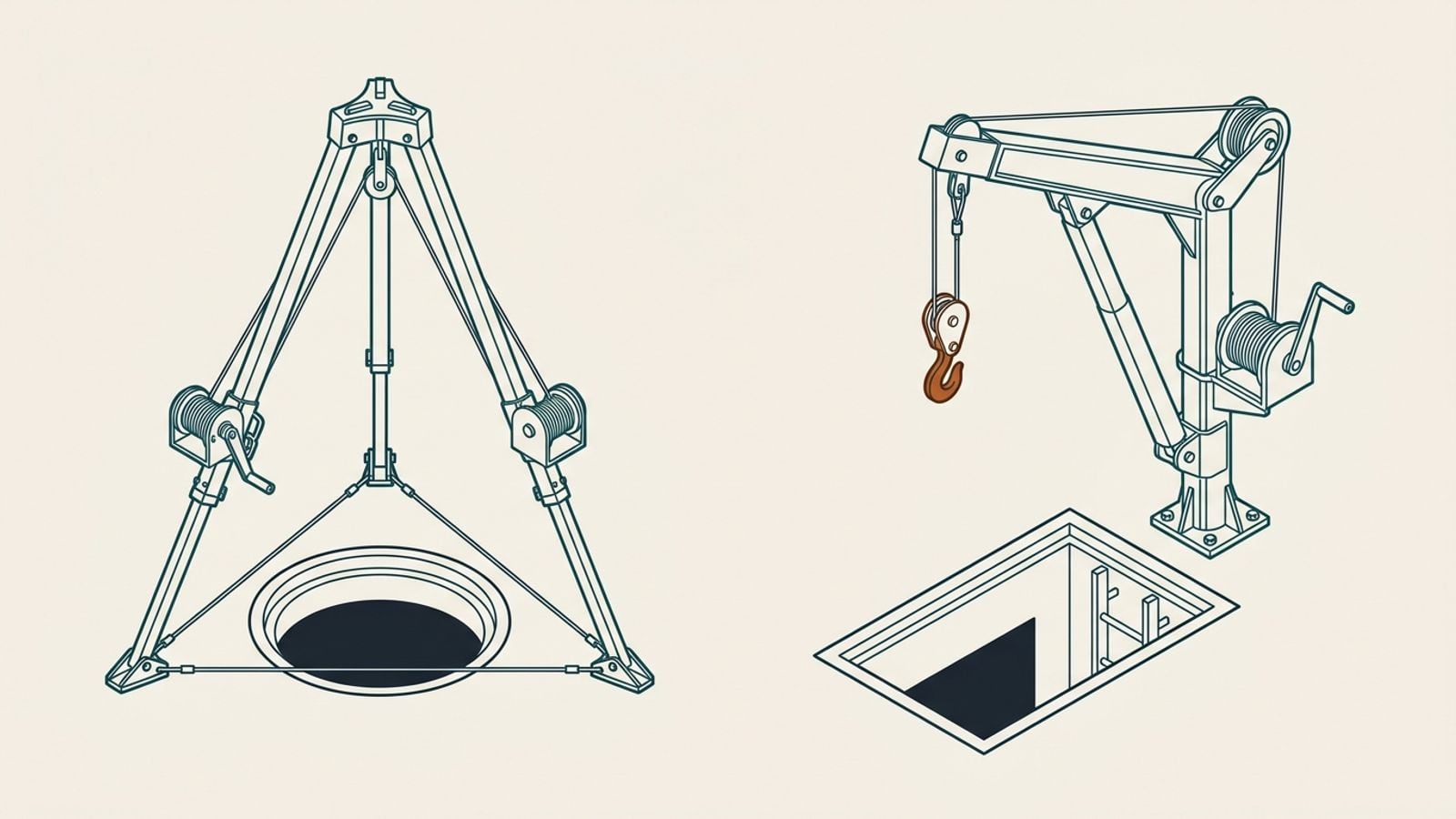
Both systems do the same core job: give you an overhead anchor above the opening for lowering, raising and retrieving an entrant, plus fall protection while they are on the line. The right choice comes down to the shape of your opening, how fast you need to be set up, and budget. Here is the honest comparison we give customers on the phone.
The short answer
- Round manhole, standard diameter, crew that moves site to site: rent a tripod. It wins on setup speed and rental cost.
- Oversized manhole, square or rectangular vault opening, or a job where the crew needs clear working room at the hole: rent a davit system.
Where the tripod wins
A confined space tripod is the default for a reason. The legs spread over a round manhole, the head centres the line over the opening, and a practised two-person crew has it standing and rigged quickly. There are fewer parts to configure than a davit, less to transport, and the day rate is lower. For municipal and utility work on standard round manholes, it is the fastest and most cost-effective way to put a compliant anchor over the hole.
Its limits are built into its geometry. The three legs have to straddle the opening, which means the opening has to fit between them, and the legs themselves occupy the space where your crew works.
Where the davit wins
Davit arm systems are more versatile than tripods. They have more adjustable parts, which lets one system cover a wider array of situations, and because the mast and arm reach over the opening from one side rather than straddling it on three legs, the crew gets more unfettered access to the opening itself.
That reach-over geometry is also what lets a davit handle openings a tripod simply cannot: oversized manholes and square or rectangular vault openings. Portable davit bases, counterweight bases and trench-box mounts extend the same arm to jobs where there is nothing for a tripod leg to stand on.
The trade-off is setup time and cost. More adjustable parts means more to configure, and davit systems rent at a higher rate than tripods.
Tripod vs davit at a glance
| Tripod | Davit system | |
|---|---|---|
| Best opening type | Round manholes | Oversized, square or rectangular openings |
| Access at the opening | Legs straddle the hole | Unfettered, arm reaches over from one side |
| Adjustability | Leg height only | More adjustable parts, wider range of setups |
| Setup speed | Fast | Slower, more to configure |
| Rental cost | Lower | Higher |
| Mounting options | Self-standing over the opening | Portable, counterweight and trench-box bases |
| Standards to look for | ANSI/ASSP Z359.1, OSHA 1910.146 and 1910.132, CSA Z259 equivalents for BC | Same |
The rigging on top is the same either way
Whichever frame you pick, best practice for what hangs from it does not change: a primary winch plus a backup fall protection system.
- Primary: man-riding personnel winch. This is your means of lowering, raising and, if it goes wrong, retrieving the entrant without anyone else going in. Retrieval-mode winches commonly provide mechanical advantage in the range of 30:1, so one attendant can raise a person under control.
- Backup: SRL-R. The most common retrieval device is the self-retracting lifeline with rescue capability. Unlike a standard SRL, an SRL-R is designed not only to arrest a fall but also to retrieve an injured worker by raising or lowering them.
Many tripods and davit arms provide attachment points for that secondary device, which is the detail that matters in an emergency: with both devices already mounted, the team can switch from non-entry retrieval to entry rescue immediately instead of re-rigging over an open hole.
Pair either system with a full-body harness; for why we stock harnesses with shoulder retrieval D-rings, see our rescue equipment checklist.
Standards, stated plainly
Tripods and davit systems should meet ANSI/ASSP Z359.1 and comply with OSHA 1910.146 and 1910.132. For BC crews working under WorkSafeBC OHS Regulation Part 9, look for the CSA Z259 series equivalents. We list the standards each unit is built to on its product page, and our guidance is WorkSafeBC-aligned.
Renting from us
We stock 7 ft and 9 ft tripods, man-riding winches, 3-way SRL-Rs and a portable davit system, all in the Access & Retrieval category, and the tripod, winch, SRL-R and harness come pre-matched in our Contractor Entry Kit. The frame is only half the job: the crew rigging it should hold current confined space entry training from our sister company OnSiteSafety. Not sure which frame your opening needs? Send us a photo of the hole with a tape across it and request a quote.
Before you book
Frequently asked questions
When should I rent a davit instead of a tripod?
When the opening is not a round manhole. Davits accommodate oversized manholes and square or rectangular vault openings that a tripod cannot straddle, and because a davit does not put three legs around the hole, it leaves more unfettered access to the opening for the crew. If the opening is a standard round manhole and you want the fastest, lowest-cost setup, the tripod wins.
What is an SRL-R and why do I need one on top of a winch?
An SRL-R is a self-retracting lifeline with rescue capability. Unlike a standard SRL, it is designed not only to arrest a fall but also to retrieve an injured worker by raising or lowering them. Best practice is a primary man-riding winch plus a backup fall protection system, and most tripods and davit arms provide attachment points for that secondary device, so the team can switch from non-entry to entry rescue immediately.
What standards should a rental tripod or davit meet in BC?
Tripods and davit systems should meet ANSI/ASSP Z359.1 and comply with OSHA 1910.146 and 1910.132, and for a BC crew you should look for the CSA Z259 series equivalents. Ask your rental house which standards each system is built to; ours are listed on every product page.
Can one winch do both work positioning and rescue?
A man-riding personnel winch is the primary means of lowering, raising and retrieving the entrant. Retrieval-mode winches commonly provide mechanical advantage in the range of 30:1, which is what lets one topside worker raise a person under control. It should still be paired with a backup fall protection device such as a 3-way SRL-R rather than being the only line to the entrant.
From the rental fleet
Gear this guide covers
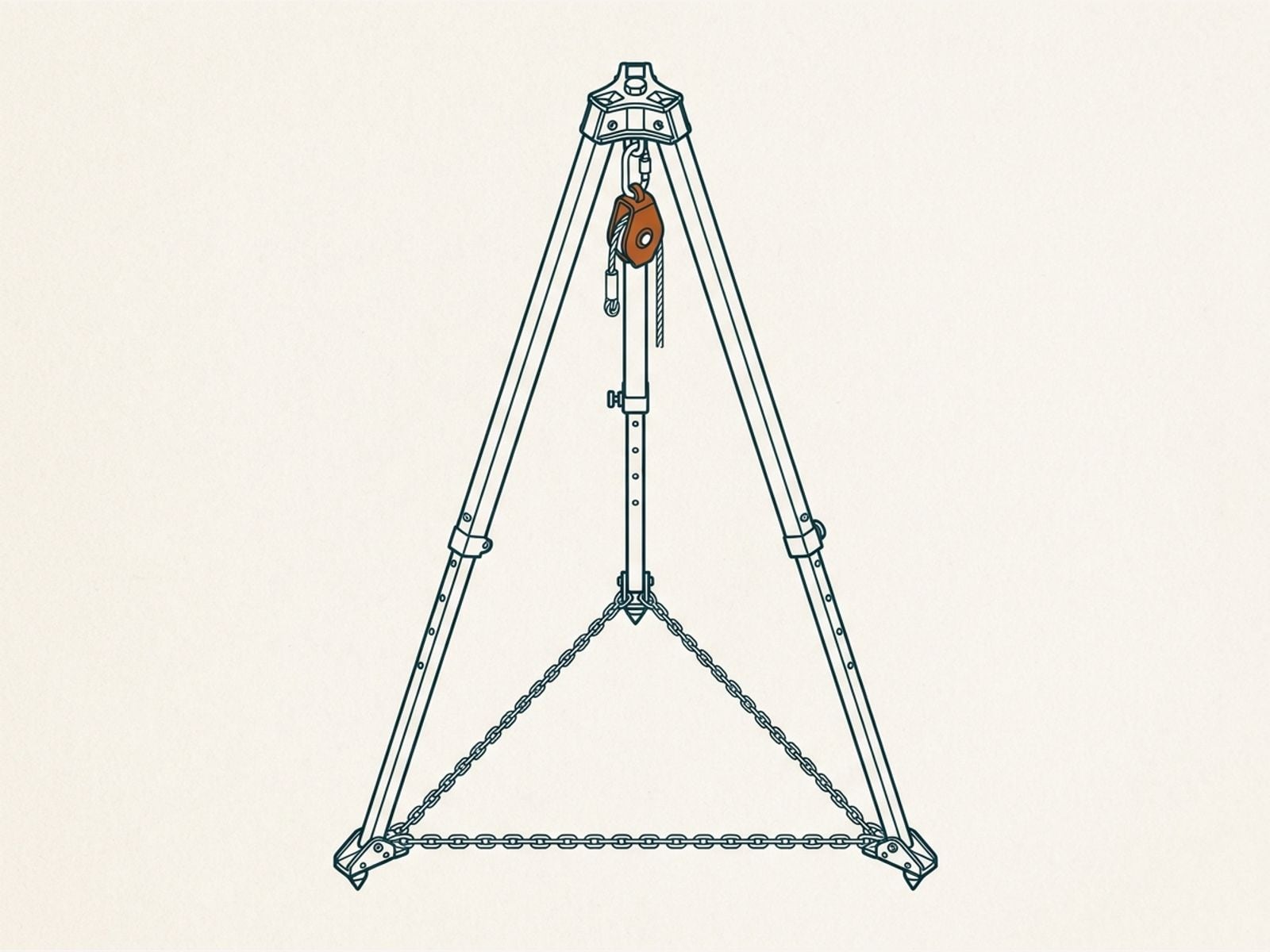
3M DBI-SALA Advanced 9 ft Tripod
Height: 9 ft, adjustable legs · Attachment points: Head anchor points for winch plus backup SRL-R
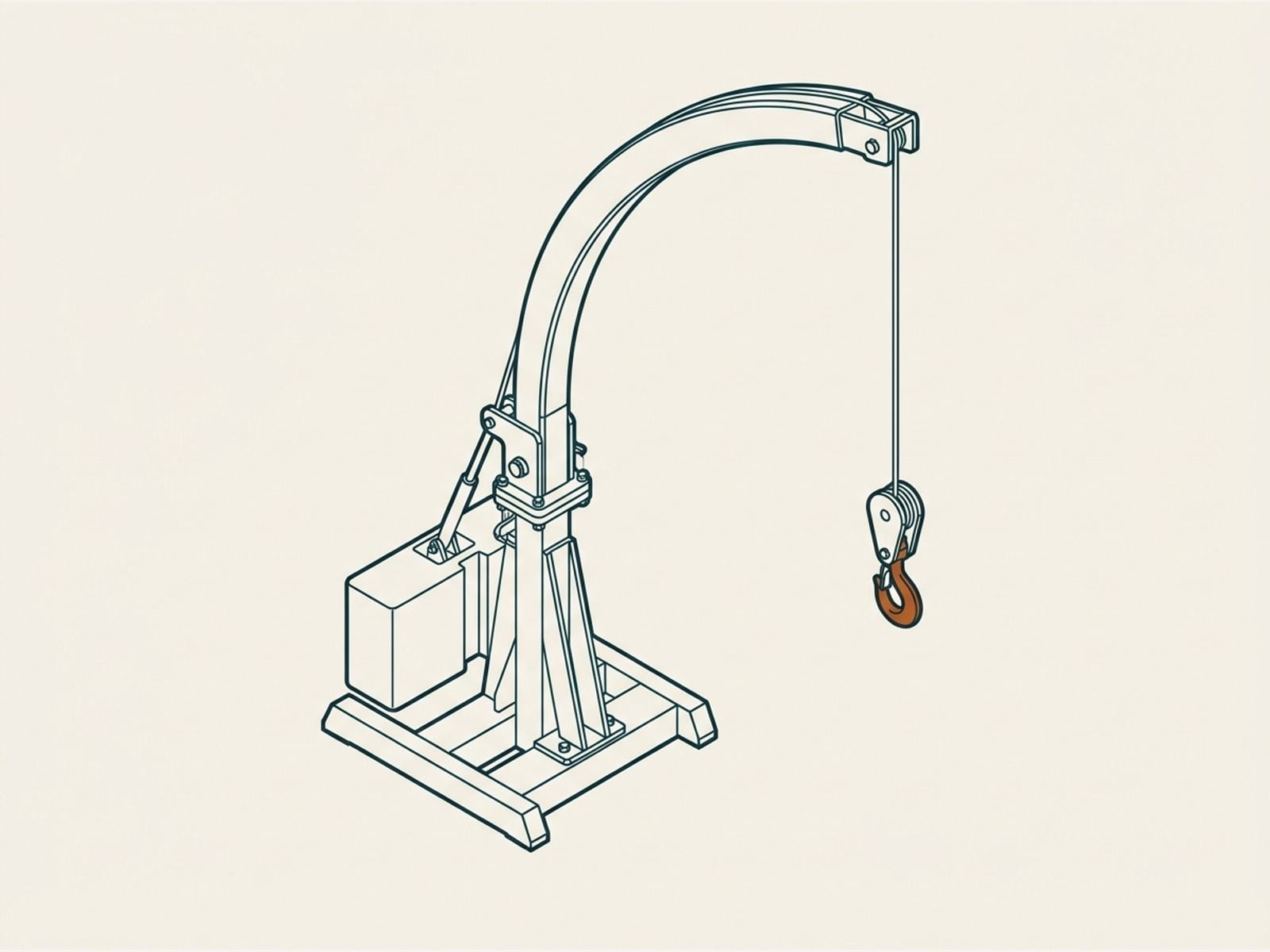
3M DBI-SALA Portable Davit System
Base: Counterweight base, no drilling or permanent anchors · Reach: Adjustable mast and offset
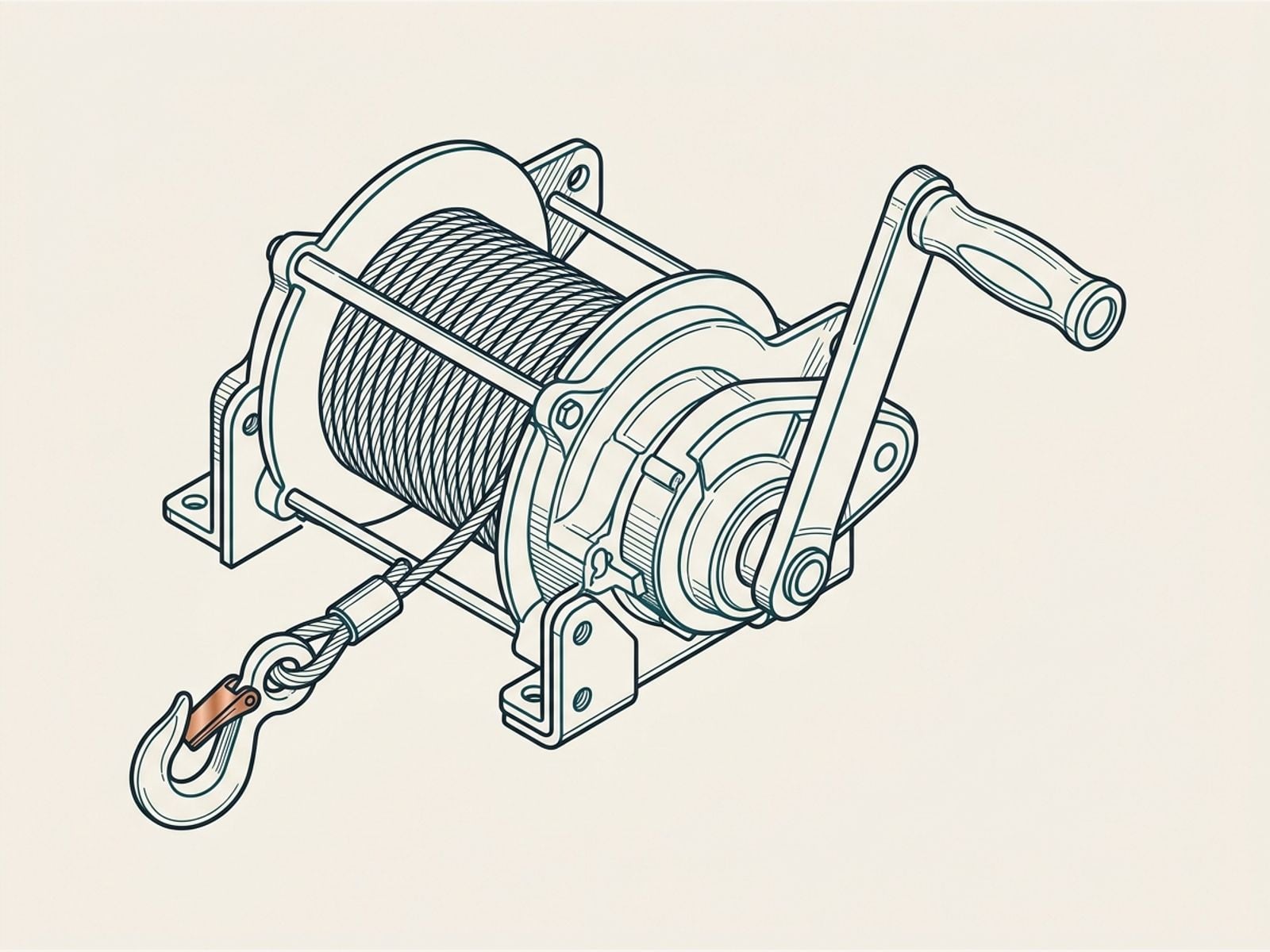
3M DBI-SALA Salalift II Man-Riding Winch
Type: Man-riding personnel winch · Mounting: Bracket mounts to DBI-SALA tripods and davits
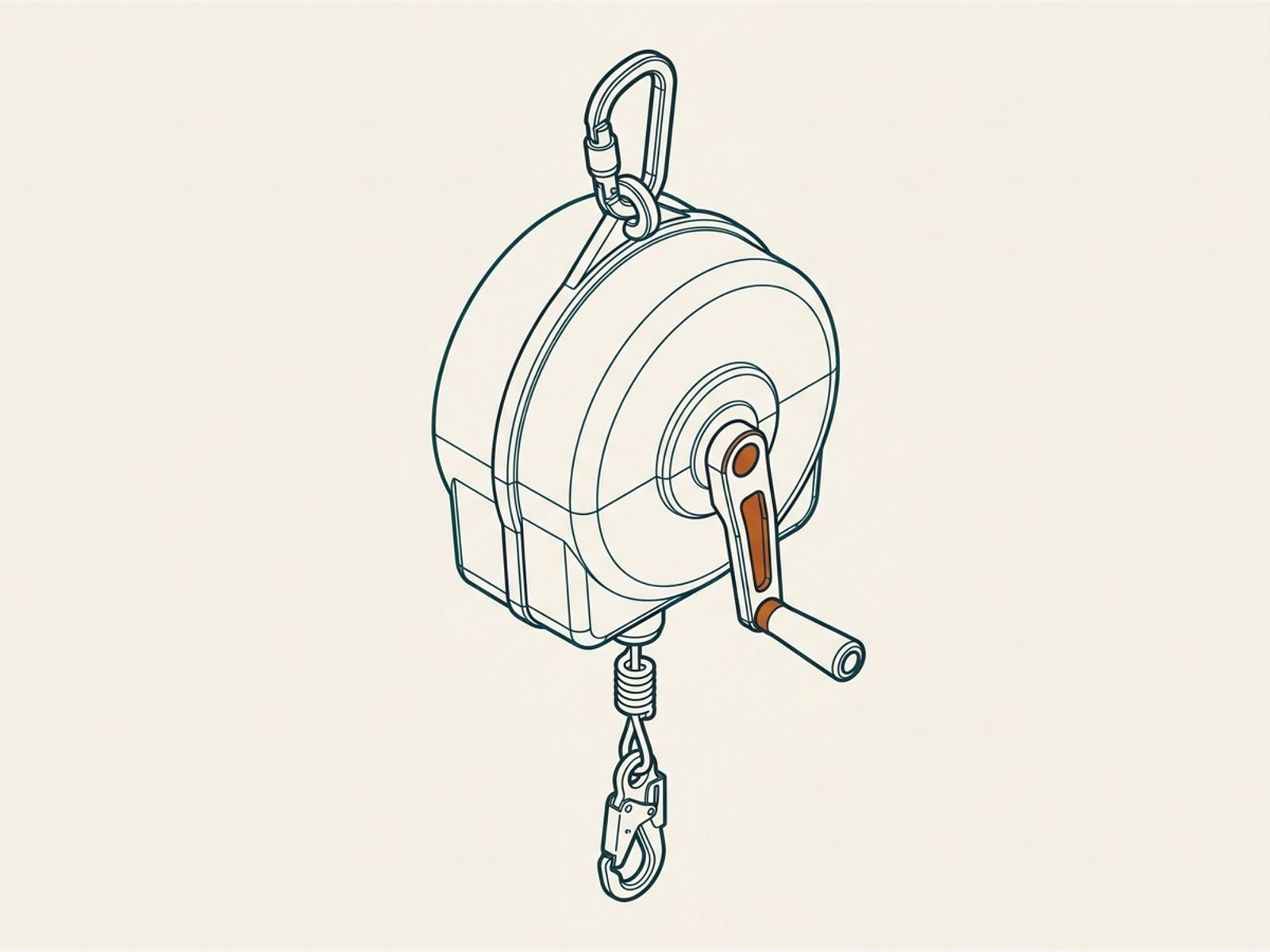
3M DBI-SALA Sealed-Blok 3-Way SRL-R
Type: Self-retracting lifeline with rescue and retrieval mode · Modes: Fall arrest plus raise and lower retrieval