Guide / Entry Control
Can a Remote Operator With a Screen Act as Your Confined Space Attendant?
Updated
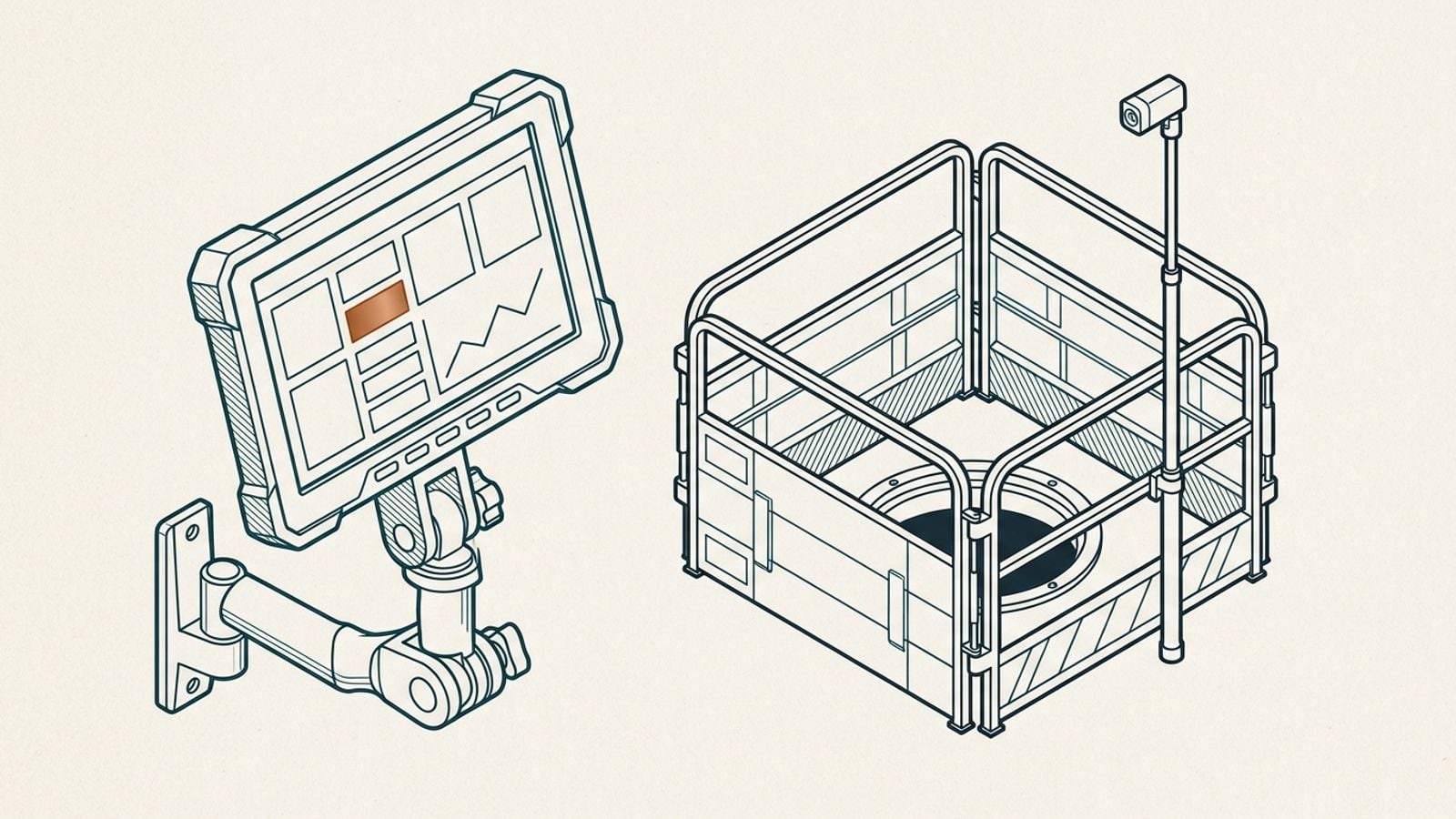
There is a real, established product category behind the phrase “remote attendant”: an operator with a computing screen watching entrants, gas readings and openings in real time. It is not science fiction and it is not a loophole. Here is what the software actually does, what the regulators have said about it, and how we rent into it honestly.
The operator-with-a-screen model
Picture a refinery turnaround: thirteen manways open on a ten-storey heat exchanger and two hundred workers moving through them. A paper clipboard at each opening took around thirty minutes to reconcile every shift. Replace the clipboards with badge readers and a central screen, and the operator sees live occupancy for every opening, with every event stored on a server for compliance reporting. That deployment is the template for the whole category.
What entry and exit software actually does
Three overlapping product families make up the market:
- Badge-driven accountability. Systems that use the security badges workers already carry to track entry and exit across large, multi-opening spaces. They can deny access based on permissions, training records or safety certifications, run over cellular, WiFi or fully offline, and keep a complete audited entrant log with live occupancy.
- Digital permit platforms. The entry supervisor completes the confined space permit on a phone: space classification, hazards, pre-entry atmospheric tests, isolation status, authorized entrants. The platform checks O2, LEL, H2S and CO readings against limits automatically, logs each worker in and out in real time, gives supervisors a live dashboard of who is inside every permitted space, and retains the permit, test data and entrant log permanently for inspection. Offline-first versions keep working without a network and sync later, and some add man-down detection through wearable motion sensors.
- Connected gas detection. The detector makers moved up-stack. Connected monitors stream alarms and gas readings from inside the space to peers, the attendant and cloud dashboards, with geo-stamped alerts identifying who had an incident, what type, and where. MSA’s version is the Altair io 4 feeding the MSA Grid dashboard, the same unit we rent.
What the regulators have said
The legal backbone of the category is an OSHA interpretation letter on the US permit-space standard, 1910.146. Paraphrased with care: a centralized monitoring system can satisfy the attendant requirements when it allows remote tracking of entrants, remote monitoring of activity inside the space, observation outside the space, and communication with entrants, provided control-room duties never interfere with the attendant’s primary duty to monitor and protect entrants.
Every clause matters. The system has to deliver all of the attendant functions, and the operator cannot be loaded with competing duties. In BC, entries answer to WorkSafeBC OHS Regulation Part 9, so treat the letter as the clearest regulatory statement of the model and hold your program to WorkSafeBC-aligned practice. Our guide to attendant requirements in BC covers the underlying role in detail.
Our Remote Attendant Visibility Kit, positioned honestly
We rent the operator’s screen as a physical kit: a rugged sunlight-readable display mounted at the opening, a connected Altair io 4 on the entrant plus an area monitor at the opening feeding the live dashboard, an intrinsically safe camera on the entry point, and an LTE router with a battery bank sized for a full shift, with a laminated attendant duty card and permit board.
The positioning is deliberate: the kit aids the attendant, it does not replace the attendant, unless your program genuinely meets the interpretation conditions above. What it does immediately, on any entry, is give the attendant continuous gas readings from inside the space, a second set of eyes on the opening, and a record you can hand to an officer. Choosing between the connected io 4 and the standard 4XR? See our 4XR vs io 4 comparison.
Hardware is half the model; the person reading the screen is the other half, and that pairs with confined space entry training from our sister company OnSiteSafety. To spec a visibility kit for your site, contact us.
Before you book
Frequently asked questions
Does monitoring software replace the confined space attendant?
Not by default. OSHA has accepted centralized monitoring as satisfying attendant requirements only when the system delivers remote entrant tracking, remote monitoring of activity inside the space, observation outside the space, and communication with entrants, and only while control-room duties never interfere with the primary duty of monitoring and protecting entrants. Unless your written program meets those conditions, the software supports the attendant, it does not replace them.
What is badge-based entry and exit tracking?
Software that uses the security badges workers already carry to log every entry and exit at every opening, deny access to anyone missing required permissions or training records, and show live occupancy for each space. On large multi-entry jobs it replaces the paper clipboard count that can take half an hour to reconcile each shift, and it keeps an audited record for compliance reporting.
What do I need to run a live gas dashboard on site?
A connected detector on the entrant, such as the MSA Altair io 4 feeding the MSA Grid dashboard, plus a screen and connectivity at the topside. Adding an area monitor at the opening gives the operator both a personal reading and an opening reading. Our Remote Attendant Visibility Kit bundles the screen, connectivity, power and mounting; ask us about it when you book.
Does any of this work where there is no network coverage?
The category has offline-first options: platforms that record the permit, atmospheric readings and every entry and exit locally, then sync with original timestamps once connectivity returns, and badge systems that run fully offline. For the live-dashboard model itself you need a link, which is why our kit includes an LTE router and battery for a full shift.
From the rental fleet
Gear this guide covers
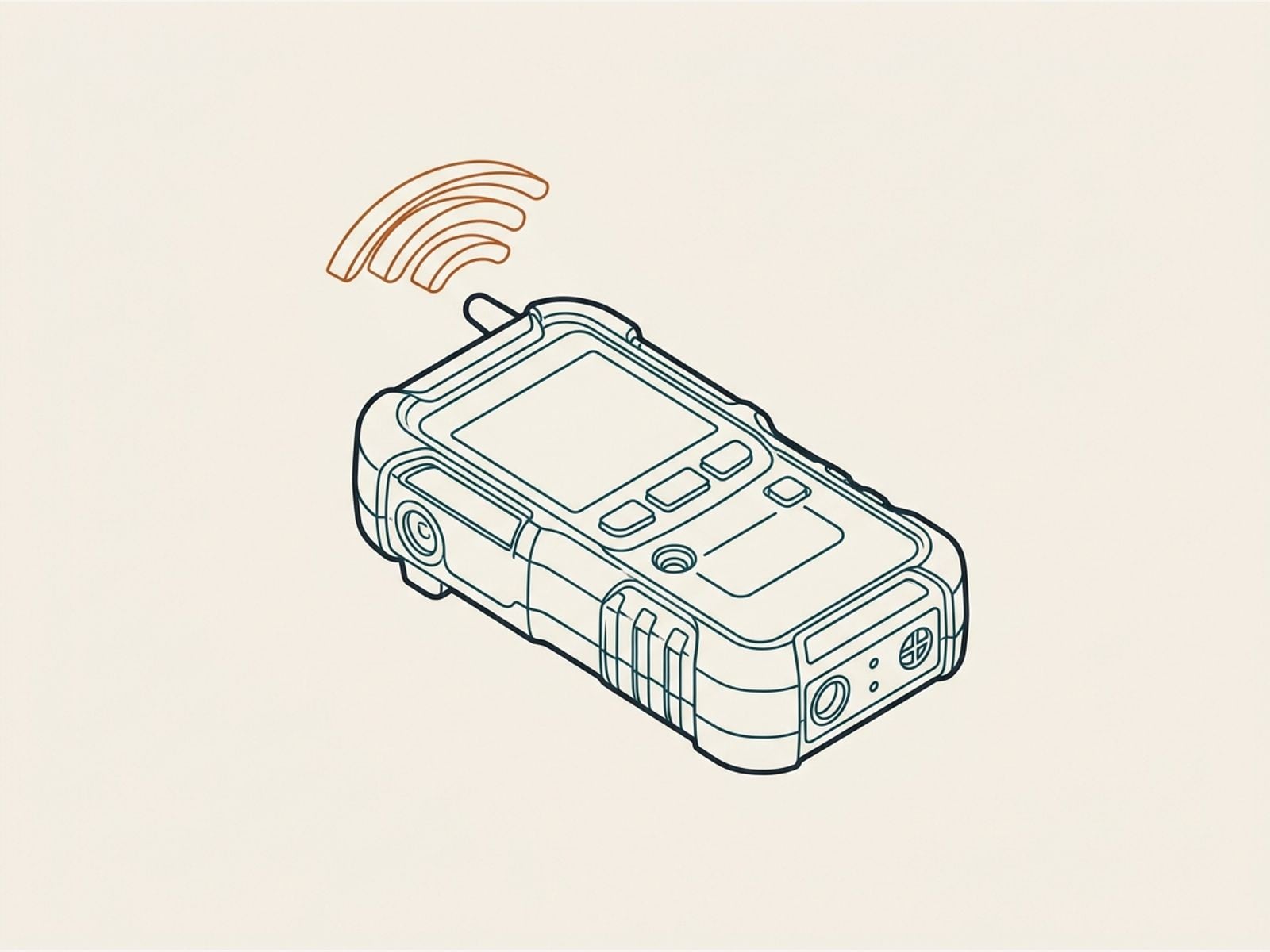
MSA Altair io 4 Connected Gas Monitor
Gases: LEL, O2, CO, H2S · Connectivity: Real-time cellular connectivity for remote dashboards
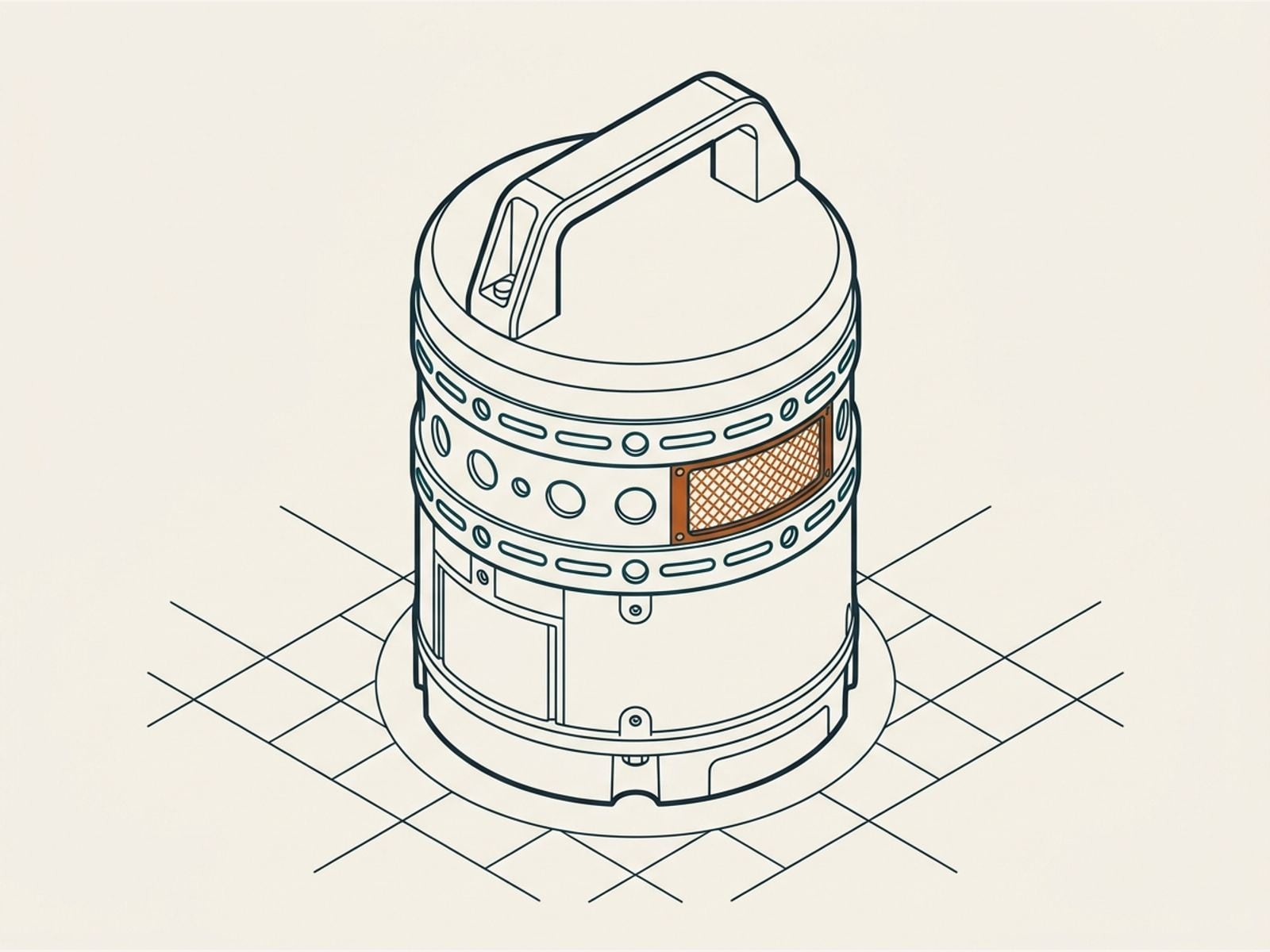
Industrial Scientific Radius BZ1 Area Monitor
Gases: LEL, O2, CO, H2S · Deployment: Perimeter and blast zone area monitoring
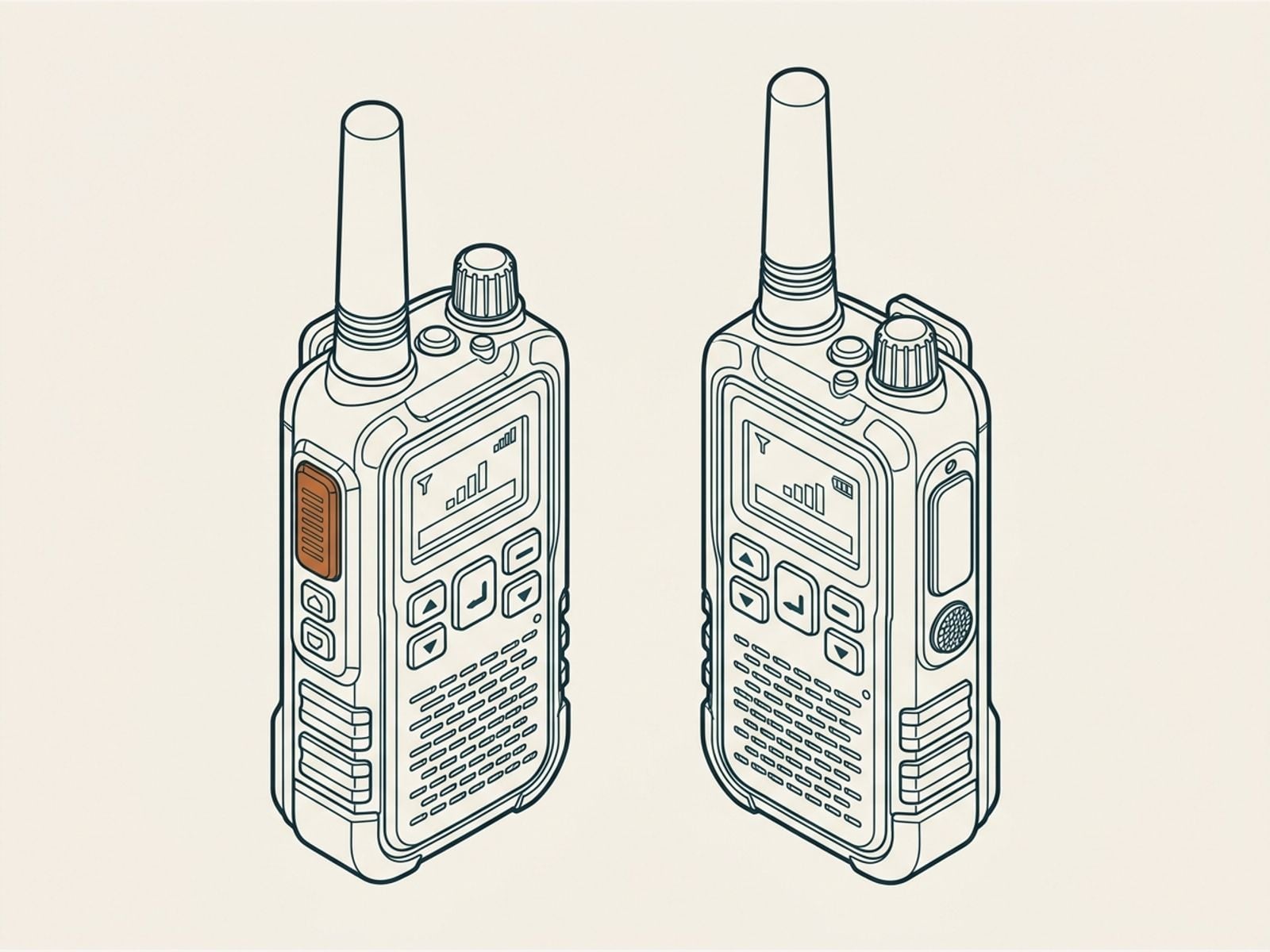
Intrinsically Safe Two-Way Radio Pair
Configuration: Pair of intrinsically safe handhelds · Use: Entrant to attendant communication